Mumbai, October, 2023.
Tata Motors, India's leading automobile
company, today released its 9th Annual CSR Report, highlighting its extensive
efforts towards addressing some of India’s most critical and social challenges
across the domains of Health (Aarogya), Education (Vidyadhanam), Employability
(Kaushalya) and Environment (Vasundhara). Collectively, these efforts have
benefitted more than 60 lakh lives over the past 10 years, with a significant
percentage of beneficiaries belonging to the marginalised communities.
In 2014, Tata Motors designed and
adopted a comprehensive 4-pillar approach to harmonise its CSR initiatives
across the country. Capabilities, experience and expertise acquired by
individual units and teams in each identified fields led to the creation and
execution of focused interventions with clearly defined outcomes and remarkable
results. By harmonising programmes across locations, leveraging digital
technologies, fostering partnerships with diverse stakeholders, and strengtheningtrust
with the communities,the company effectively surpassed itsprojected impact.
Speaking on the
occasion, Mr. Vinod Kulkarni, Head of
CSR at Tata Motors, said, “At Tata Motors, our CSR efforts are deeply
rooted in our unwavering commitment to promote inclusive growth, thus contributing
to nation-building. We are humbled to have positively impacted millions of
lives through our efforts. In fact, several of our CSR ideas and programmes
have grown to become marquee projects, worthy of being emulated as models for
community development. Using the novel approach of ‘More for Less for More’, we
have narrowed the gap between our aspirations and the available resources,
achieving pan-India scale for numerous projects. Our commitment to advancing our CSR agenda
remains steadfast, as we strive to create a more inclusive, equitable, and
sustainable India. By meticulous planning and effectively utilising our
financial and human resources, we aspire to make a progressively greater impact
with each passing year.”
Here's a quick glance into the company’s select marquee projectsin the areas of Health,
Education, Employability, and Environment, that have made a significant impact
in terms of convergence, scale and reach, over the last ten years.
Addressing
Malnutrition Through Community-based Interventions
Tata Motors has made significant strides in addressing the issue
of malnutrition among children. By shifting its focus from institutional-based
clinical approaches to community-based health interventions, the company has
been able to create a sustainable impact. Despite having high levels of
severely acute malnourished and moderately acute malnourished children in some
of the targeted states, the company has
successfully moved more than 91% of malnourished children to healthy zones in
the past decade.
Empowering
Leprosy Patients with Early Detection and Care
Tata Motors has been actively involved in raising awareness about
leprosy and providing early detection and care to affected individuals. Through
annual door-to-door awareness campaigns in hard-to-reach villages, the company
has screened thousands of households, identified
and treated over 4,000 leprosy patients. The company's community-based
Leprosy programme in Jharkhand, a state with a high incidence of the disease,
is the first of its kind initiative in the country to eradicate the disease.
Bridging the
Educational Gap through Digital Empowerment
Tata Motors' flagship remote learning programme, ENABLE, has helped
talented students from over 550 Jawahar NavodyaVidyalayasaccess resources and
guidance for admission to the top engineering and medical institutions. Over
the past decade, this programme has benefitted
over 20,000 aspirants from underprivileged backgrounds, many of whom have secured
admissions in prestigious institutions such as in IITs, AIIMS and
government-run engineering and Medical colleges. Additionally, support classes
are being conducted for students in grades IX and X in state-run government
schools, utilising both digital and in-person modes. This approach has proven
to be effective in improving the pass rates and academic performance. Notably,
this model has been successfully implemented in about200 schools under the
Thane and Brihanmumbai Municipal Corporation (BMC) in Maharashtra.
Skilling
Unemployed Youth for a Brighter Future
The LEAP programme, part of the Kaushalya initiative by Tata
Motors, focuses on skilling unemployed youth, especially in Automotive courses
and facilitating their entry into the workforce. This programme has also
enabled young women to overcome stereotype barriers and attain financial
independence. Over the past decade, this
skilling initiative has grown from 2 to 60 institutes. About 85% of the
trainees have secured placement with an average salary ranging between Rs.
15000 to 18000, thereby creating a positive impact on their lives and the
economy.
Restoring and
Expanding Rural and Urban Forest Cover
With the objective of creating sustainable livelihoods
for the farmers through Agro-Forestryplantation and transforming unused land into cultivable areas by prioritising government convergence,
the company has successfully planted nearly
one million trees, ensuring the survival of over 90% of them. In FY24, an
additional one million trees are planned to be planted.
In collaboration with the Forest Department (GOI) and TERRE Policy
Center, a significant expanse of 16.5 hectares of forest land in Warje (urban
Pune) has been reforested. This initiative has led to the creation of
micro-habitats that support a diverse range of flora and fauna. Over the past
decade, the project has expanded to
cover an area of 200 hectares, contributing to the restoration of urban forest
cover and the preservation of biodiversity.
Water Security
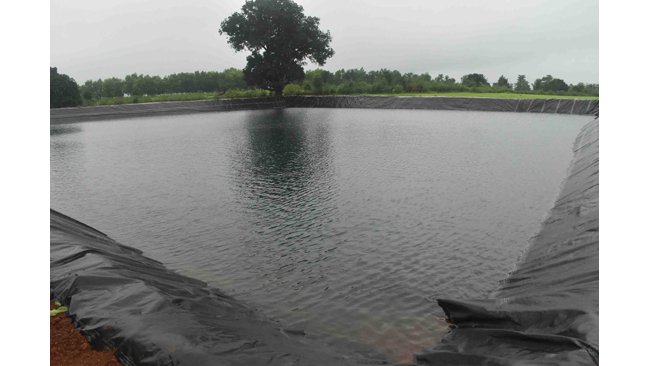
This year, the company announced
anambitious project of creating 100 Amrit Sarovars with a capacity of storing
one crore litres of water each, leading to enhanced water availability in
75 sites in Palghar district and 25 sites in Pune & Satara district.
© 2019 All Rights Reserved | democraticjagat2019 | Developed By DIIT IT SERVICES & SOLUTIONS