New Delhi, December 18, 2020.
“As the world’s youngest democracy, and one
that is most prone to natural disasters, India must be well prepared to rescue
children who face the risk of losing parental care at the times of disasters
and emergencies such as cyclones, floods, earthquakes, droughts, and
pandemics,” urged experts.
Participating in a virtual media
briefing on ‘Impact of Natural Disasters on Children’, organised by SOS
Children’s Villages of India (SOSCVI), India’s largest child care NGO providing
family-like care for children without parental care, the experts: Mr.
Sumanta Kar, Senior Deputy National Director, SOSCVI, and Mr. Anil Kumar
Sinha, IAS (Rtd.), mentor and consultant on hazardous risk management,
climate change adaptation & sustainable development, said that natural
disasters and extreme weather events have become a growing threat to the
well-being of children. Globally at least 175 million children are affected by
such and other natural disasters every year.
They pointed out that India's
unique socio-economic, and geo-climatic conditions make it one of the most
vulnerable country to natural disasters. The Global Climate Risk Index Report
2019 ranks India as the 14th most disaster prone country in the world. Further,
over 40% of its population is below 18 years of age. Given this backdrop, India
ends up becoming one among the countries with the highest number of affected
children.
The experts noted that in the
event of a natural disaster children from poor families become more vulnerable
to injuries - their risk of succumbing to injuries is high, in the absence of
timely medical care. Natural disasters disrupt food supply. Hence children
suffer from hunger and malnutrition. They get diarrheal illnesses owing to
water contamination.
They said that psychological
damages to the children are worse, and may long last well into their adulthood.
Disasters frighten the children and make them successful. Events like damages
to their homes and possessions, displacements and migration of their families,
the experience of watching the stress their parents undergo, and losing
loved ones - all can leave children emotionally drained. Further, breakdowns in
social networks and neighborhoods and loss of livelihood of parents can create
a situation for neglect or abuse of children.
Talking about the education of
vulnerable children, the experts said that when their families lose their
livelihood or are displaced, the education of the children is disrupted. Many
children from the vulnerable families hit by disasters are forced to take up
work.
On the core components of
children-focused disaster preparedness, the experts said that it is not just
about distributing food or hygiene kits, but also about building capacity at
local communities, taking care of the emotional well-being of the children by
setting up necessary physical infrastructure and securing the services of
professional caregivers, and rebuilding livelihoods of parents and caregivers.
In his address, Mr. Anil Kumar Sinha, said,"Though
natural disasters appear to affect everyone the same, in reality they affect
children and women more as they are by far the most vulnerable. The impact is
also high on and marginalised communities.
Children suffer tremendous psychological trauma - as evident from the
ongoing pandemic, children are deprived of their basic freedom to play
outdoors, interact with their peers and to learn. Hence it calls for effective
risk communication and community engagement in response to management of
disasters. SOS Children's Villages of India is doing a commendable job on these
two fronts. Other organisations working in this space can
benefit by imbibing their good practices."
In his presentation on the
disaster management activities of SOSCVI, Mr Kar said that his organisation had
supported 15,000 children during emergencies and disasters in 2019. The NGO
reached out to children and their communities during major disasters in the
past, including earthquakes of Latur (Maharashtra, 1993) and Bhuj (2001),
Tsunami (southern coast -2004) , Cyclone Fani (2019) and more recently Amphan, Nisagra, Nivar and
Burevi, and COVID-19 (2020).
“As a response to COVID-19, we
focused on safeguarding our own children (over 6,500) who live in our Villagesby
safeguarding their health and emotional well-being as well as ensuring that
they continue to get an education using digital means. We also looked after
children (over 17,500) of the vulnerable communities, where we run our Family
Strengthening Programme. The latter is an outreach programme that prevents
‘at risk’ children from losing parental care by securing and upholding family incomessustainably
by empowering women. During lockdown, we supplied essential food and hygiene
kits to them. We are now working on the restoration of lost livelihoods or
developing alternative livelihoods through capacity building and skilling. We
also ensure that the children of vulnerable families continue to get digital
education and activity based learning,” he said.
SOSCVI reached out to more than
26,500 children (including 2,500 new children) in 2020 through these
interventions. It had set up two quarantine centres in Bhopal and Pune for
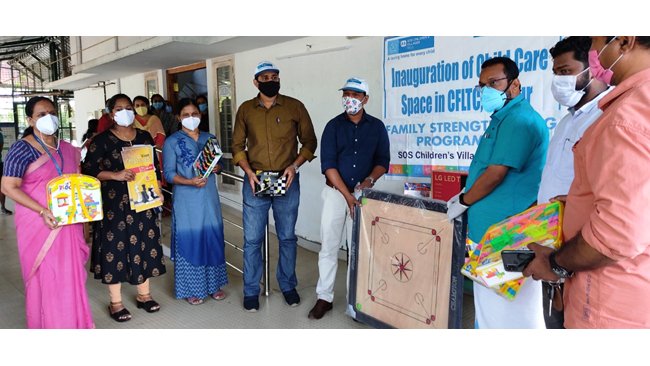
abandoned children. It opened a Child Care Space at a Covid 19 First Line
Treatment Centre in Puthur Panchayat in Kerala. By 2021, the NGO is planning to
have increased its capacity adequate enough to reach out to 8000 new
children.

© 2019 All Rights Reserved | democraticjagat2019 | Developed By DIIT IT SERVICES & SOLUTIONS