Jaipur,
July 2026.
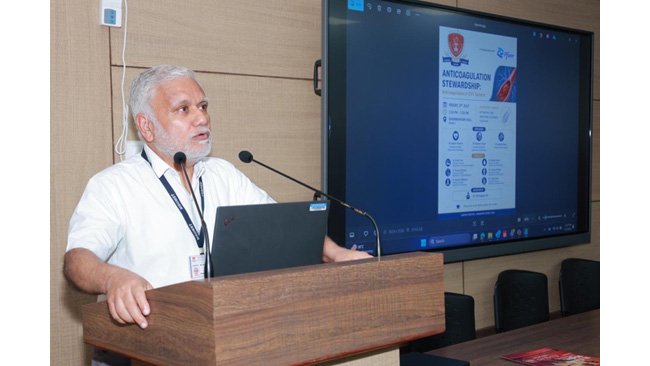
Pfizer, in
collaboration with Mahatma Gandhi Medical College & Hospital (MGMCH),
Jaipur, recently conducted a scientific education programme to
support the development of a hospital-based Anticoagulation Stewardship Program
under its ACE-CARE Network initiative. The programme was designed to
strengthen management of atrial fibrillation (AF), a common heart rhythm
disorder associated with a significantly higher risk of stroke, by encouraging
evidence-based treatment pathways, consistent protocols and closer
collaboration across specialties.
More than 100
healthcare professionals participated in expert-led scientific
sessions, case discussions, and multidisciplinary discussions on
practical anticoagulation challenges in tertiary care. The deliberations
addressed stroke prevention in AF, post-ACS/PCI anticoagulation decisions, identifying missed
AF in stroke patients, acute venous thromboembolism, high-risk patient
profiles, and questions around initiation, interruption, restart and
monitoring of anticoagulation therapy.
The programme highlighted
the need to move from individual clinician-dependent anticoagulation decisions
to a hospital-wide stewardship model built on shared standards, clear
accountability, structured communication, and patient-centered follow-up.
This approach is especially relevant in tertiary care hospitals, where patients
often move across emergency, cardiology, neurology, surgery, orthopaedics,
intensive care, medicine and discharge settings, and each transition
creates an opportunity to improve safety, continuity and outcomes.
Dr.
Pankaj Gupta, Head – Medical Affairs, Pfizer, said, "Improving outcomes
for patients with atrial fibrillation requires close partnership between
healthcare professionals across specialties. Through our collaboration with
Mahatma Gandhi Medical College & Hospital under the ACE-CARE Network
initiative, we are equipping clinicians with the latest scientific knowledge
and encouraging consistent treatment practices that can help reduce the risk of
stroke."
Dr VK Kapoor, Professor of Surgical
Gastroenterology andPro Vice Chancellor, Mahatma Gandhi University of Medical
Sciences & Technology (MGUMST) said,“MGMCH is
pleased to partner with Pfizer through the ACE-CARE Network initiative to
strengthen anticoagulation stewardship. Effective anticoagulation management
requires a coordinated approach across disciplines, so that patients receive
the right treatment at the right time while minimizing risks. Initiatives like
this help build greater awareness, standardize best practices, and improve
patient safety and outcomes.”
With an
estimated 7.9 million cases, India has the second highest number of atrial
fibrillation patients. People with AF are three to five times more likely to
suffer a stroke than those with normal heart rhythm. Early diagnosis,
risk-based treatment and ongoing reassessment are important to
reducing preventable stroke risk.
By helping
hospitals build acommonanticoagulationlanguage across specialties, Pfizer’s ACE-CARE initiative
aims to enable safer decisions, fewer variations in practice, and stronger
continuity from diagnosis to discharge and follow-up.The Anticoagulation
Stewardship Program brings scientific value by translating guideline principles
into practical, hospital-ready workflows. Key elements include:
·
Risk
stratification and appropriate treatment decisions
·
Standardized
anticoagulation pathways
·
Multispecialty
coordination
·
Transitions-of-care
safety
·
Patient-centered
education and adherence support
·
Measurement and
continuous improvement
The collaboration is expected to enhance atrial fibrillation and
anticoagulation care at MGMCH by promoting timely diagnosis,
protocol-driven treatment, coordinated referral and follow-up pathways, and
consistent use of evidence-based anticoagulation therapy. For patients in
Jaipur and neighboring districts who seek care at the hospital, these
efforts can help reduce stroke risk, improve patient safety and
support better long-term health outcomes.

© 2019 All Rights Reserved | democraticjagat2019 | Developed By DIIT IT SERVICES & SOLUTIONS