New Delih, Fenruary 02, 2026.
Finance Minister Nirmala Sitharaman presented her ninth consecutive Budget on Sunday, 1 February.
During her speech, she highlighted various reforms for the country.
Ahead of presenting the Budget, FM Sitharaman paid her visit to the finance ministry in Kartavya Bhavan and also met President Droupadi Murmu following traditions.
As FM Sitharaman presented the Union Budget 2026 on Sunday, a key focus was primarily on income tax announcements and income tax slabs Budget 2026. However, the salaried taxpayers and middle class were left mostly disappointed as no new relief was announced.
The FM did not make new announcements regarding income tax slabs, but proposed to extend the revised ITR filing deadline to 31 March with a nominal fee.
Budget 2026 has proposed a high-level committee to review the banking sector. Public sector NBFCs like PFC and REC will be restructured, which in turn will improve efficiency.
“The announcement to set up a high-level committee on banking and financial sector reforms is a significant step toward aligning the financial ecosystem, including NBFCs and banks, with India’s long-term goals,” said Kapil Garg, MD of Mufin Green Finance.
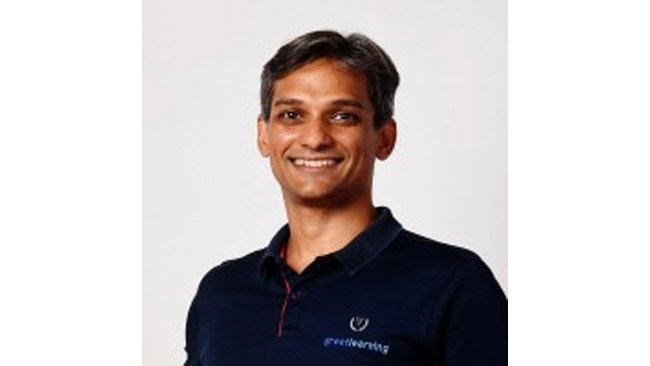
Mr. Arjun Nair, Co-founder, Great Learning Said The Indian Union Budget 2026–27 is a decisive step in repositioning education as a core economic and workforce engine for India. It is encouraging to see a clear emphasis on employability, AI integration, and industry-aligned skills reflects a strong understanding of how talent and careers are evolving. According to me, linking education more directly with jobs, entrepreneurship, and services-led growth is the right direction. The push to embed AI across learning, expand higher-education capacity around industrial corridors, and encourage modular, industry-designed programmes will meaningfully strengthen India’s talent pipeline.
For the edtech sector, this creates a strong opportunity to move beyond content and play a deeper role in shaping learning outcomes. AI, industry partnerships, and closer collaboration with institutions will be key for edtechs to deliver more relevant, job-ready learning at scale.
" The Union Budget charts a growth-oriented path while staying anchored in fiscal discipline. With the fiscal deficit at 4.4% this year and projected at 4.3% next year, it provides stability as Bharat advances towards its 2047 vision.
The emphasis is on durable capacity building. The revival of 2,000 industry clusters and the ₹10,000 crore MSME Growth Fund reaffirm the central role of SMEs and manufacturing in long-term growth.
A clear shift is the focus on building “Champion MSMEs” through a three-pronged approach—equity support, liquidity support via TReDS, and professional support through Corporate Mitras, particularly in Tier-II and Tier-III towns.” Said Shekhar Bhandari, President – SME, Kotak Mahindra Bank
© 2019 All Rights Reserved | democraticjagat2019 | Developed By DIIT IT SERVICES & SOLUTIONS